Journal Articles
Reimagining a Tropical Paradise: The Circulation of Imperial Ideologies in Early-Twentieth-Century Caribbean Cruise Guidebooks
Journal of Tourism History (2025)
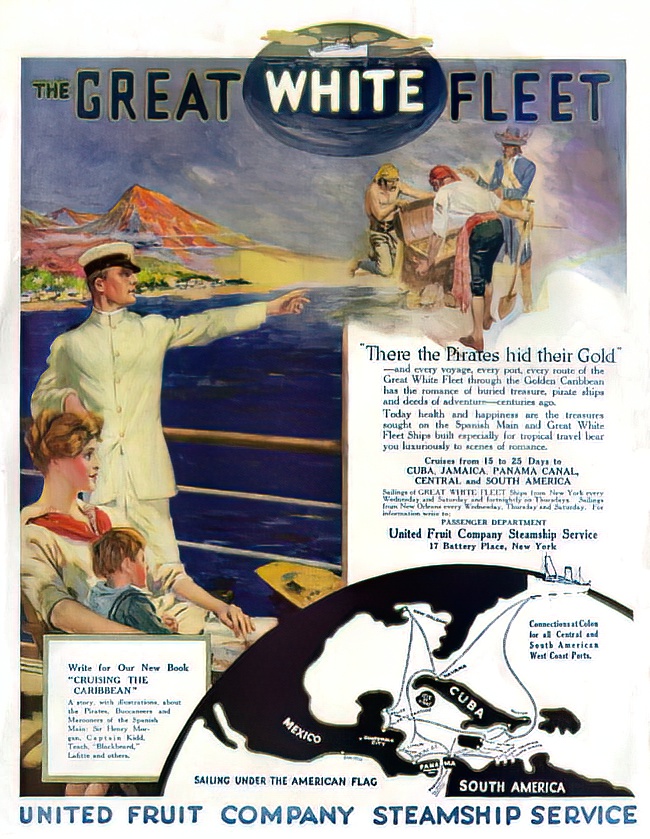
United Fruit Company, “There the Pirates Hid Their Gold,” 1916, https://archive.org/details/UnitedFruitCompanySteamshipService1915A.
This article explores how early-twentieth-century cruise guidebooks shaped perceptions of the Caribbean through imperial ideologies. Focusing on writers Harry L. Foster and Eleanor Early, it examines how their guides depicted the region as distinct from the tropics promoted by companies like the United Fruit Company. While Foster and Early encouraged tourists to look beyond stereotypes, their narratives ultimately reinforced colonial ideas, presenting the Caribbean as a leisure destination for the growing US market.
Cultural Globalization at Sea: The Rise of the Modern Caribbean Cruise Industry
Globalizations (2024)

Mass-market cruise lines like Carnival, Royal Caribbean, and Norwegian rose in the late 1960s and 1970s, targeting middle-class Americans drawn to cultural tourism. From the late 1970s, they promoted Eurocentric representations of Caribbean societies, often flattening cultural diversity. Onboard themes reimagined global cultures for passenger comfort, reducing cultural complexity. As agents of globalization, these companies turned cruise ships and ports into controlled “metaspaces,” reinforcing their economic and political power while erasing cultural difference.
Virtual Empire: Performing Colonialism in the MMORPG Runescape
Games and Culture (2023)

This article explores how in-game advancement in the MMORPG Runescape reflects virtual performances of colonial exploitation. Through four case studies—exploitative archaeology, colonial cartography, imperial diplomacy, and resource extraction—it examines how players engage in empire-building mechanics to progress. In connecting the advancement of user accounts to performances of empire, it is argued that Runescape reproduces historic colonial projects in which European powers commodified non-European societies to advance their own economic and cultural agendas.
The World on a Ship: Producing Cosmopolitan Dining on Mass-Market Cruises
Food, Culture & Society (2019)
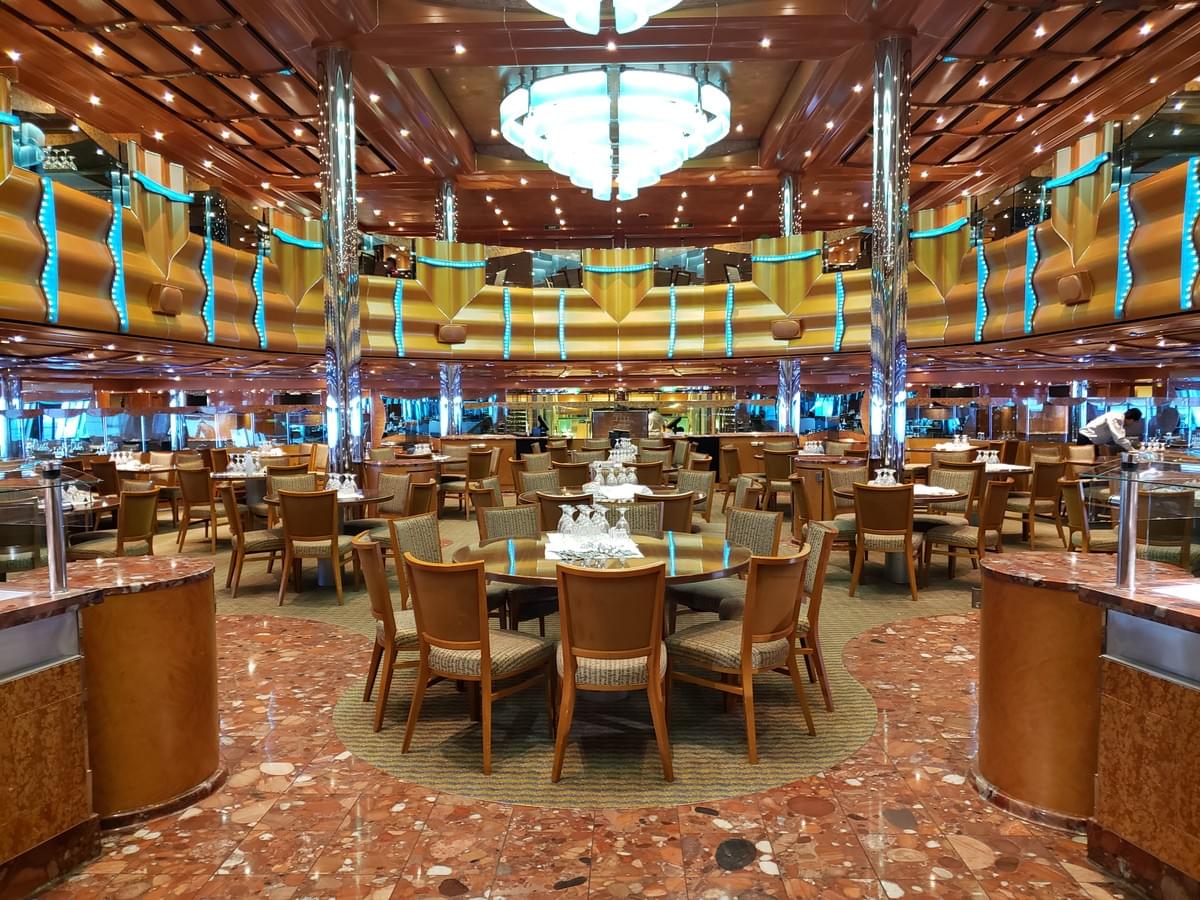
This article examines how mass-market cruise lines use food, labor, and built environments to create culinary experiences marketed as cosmopolitan. Rather than offering full immersion in any single culture, these companies blend multiple international dining themes onboard to appeal to passengers seeking global experiences. In studying how mass-market cruise lines as mobile spaces of containment combine both international and localized dining experiences to offer the “world on a ship,” scholars of tourism can better understand how travel companies produce conceptions of cosmopolitanism at destinations.
The Culinary Gender Binary in an Era of Multiculturalism: Foodwork in Toronto’s Late Postwar Italian Immigrant Community
Journal of Family History (2018)
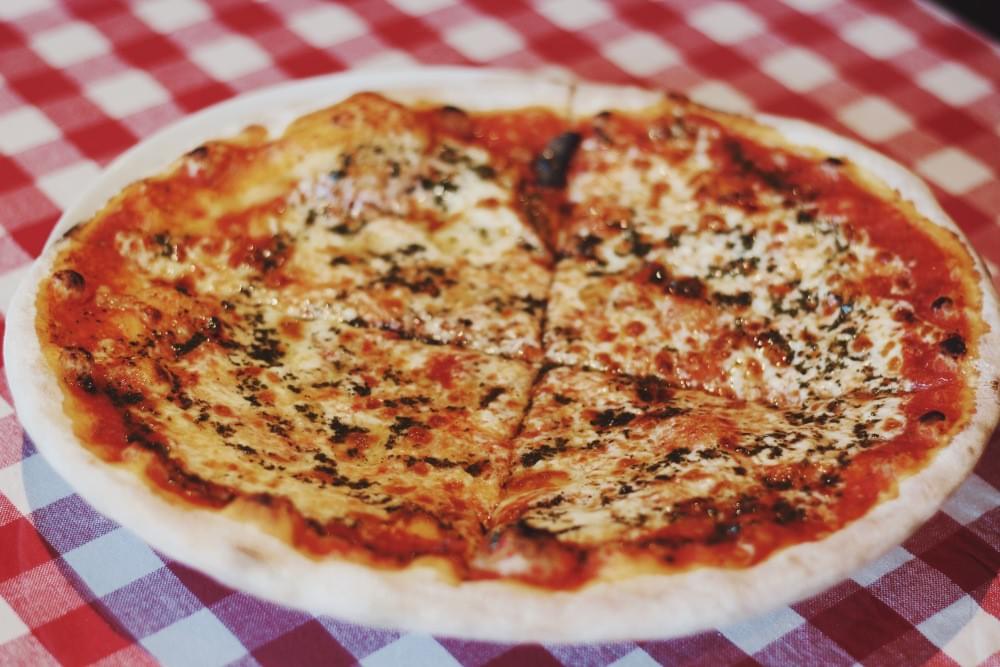
This article uses oral histories to examine how the migration process affected foodwork carried out by late post-war Italian immigrants in Toronto. Culinary gender roles remained preserved as narrators journeyed to Toronto. However, by the twenty-first century when national discourse emphasized a multicultural Canada—the climax of the shift toward culinary pluralism—the narrators each embodied a range of food masculinities and femininities. Their experiences reveal motivations for culinary labor beyond binary gender norms, pointing to the need for a new framework that reflects how migration and multiculturalism reshape food and identity.
Mediating Cultural Encounters at Sea: Dining in the Modern Cruise Industry
Journal of Tourism History (2017)
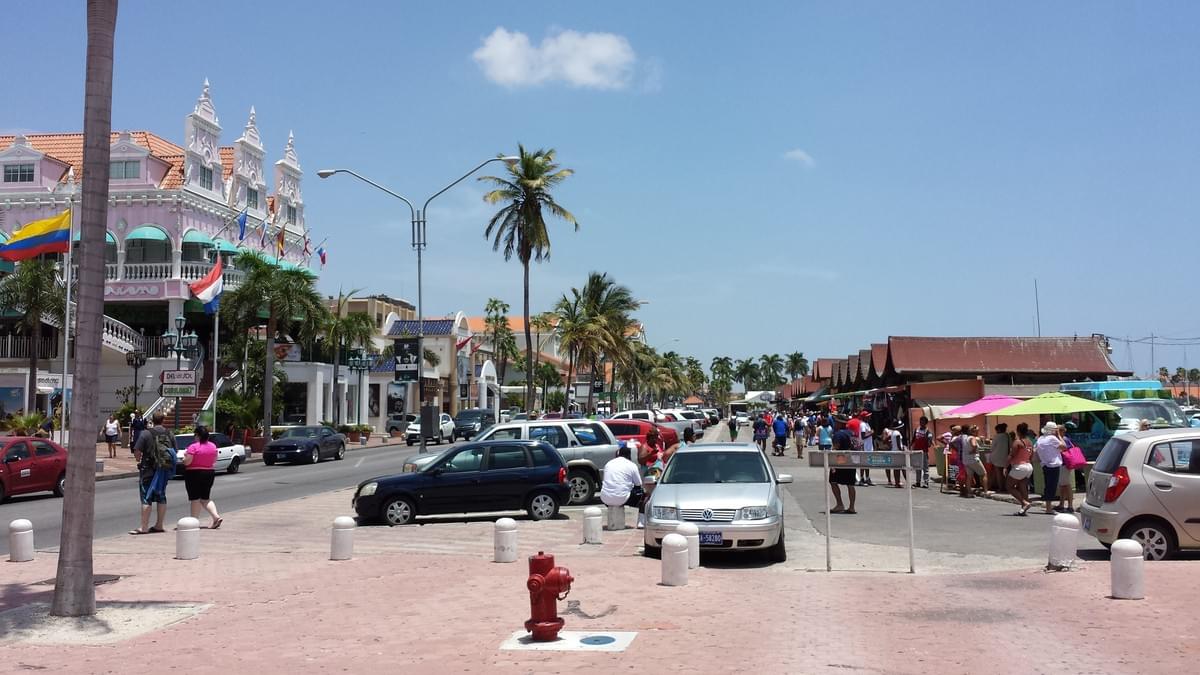
Before the 1970s, cruises catered mainly to elites, but the rise of a middle-class market brought dramatic changes—including revamped menus to suit new tastes. Modern mass-market cruise lines began offering cuisines marketed as exotic” using food to mediate passenger encounters with cultural Others. Marketing shaped whether dishes were seen as familiar or foreign, reflecting how companies wanted passengers to view racial and cultural difference. Today, cruise ships feature ethnically themed dining and immersive culinary spaces aboard constantly mobile platforms. This unique model encourages rapid, curated cultural immersion through food, revealing how cruise lines commodify global cultures for consumption.
Dissertation
The World on a Ship: Simulating Cultural Encounters in the US-Caribbean Mass-Market Cruise Industry, 1966 – Present
Link to Dissertation
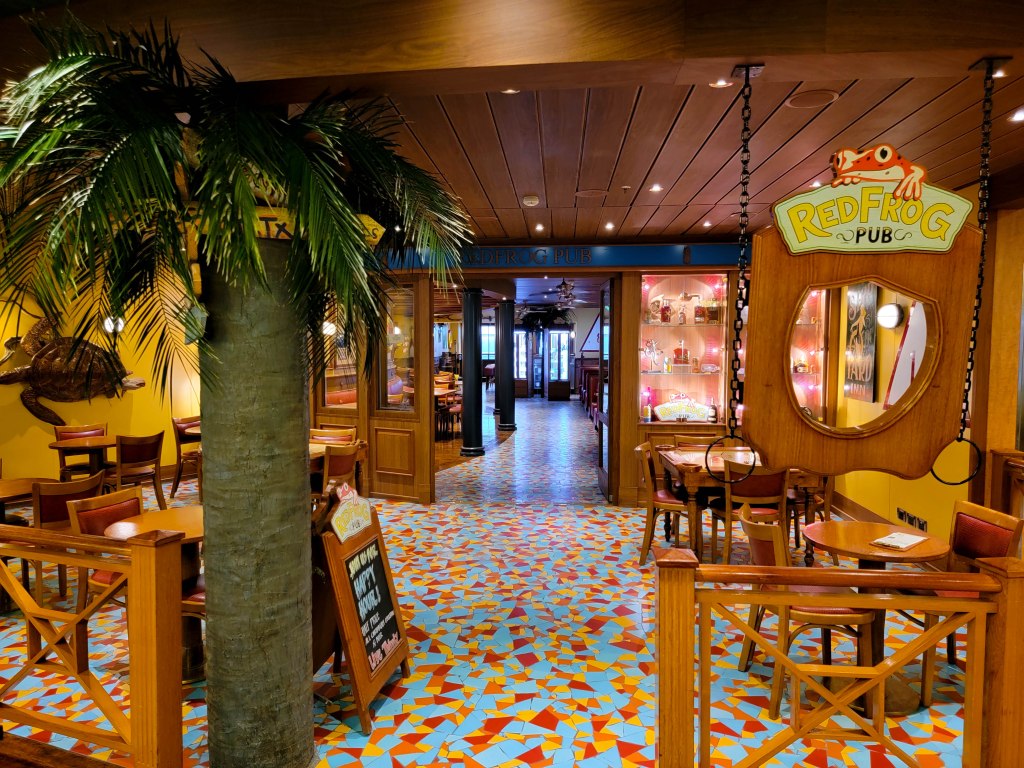
This dissertation explores the rise of mass-market cruise lines like Carnival, Royal Caribbean, and Norwegian in the 1960s-70s, analyzing how they marketed cultural and geographic theming to an expanding American middle class in the coming decades. It argues that these companies used simulated global cultural experiences to attract passengers while appropriating spending from local Caribbean economies.
Select Awards:
Joseph-Armand Bombardier Canada Graduate Doctoral Scholarship, Social Sciences and Humanities Research Council of Canada (2019)
Alvin Achenbaum Grant, Hartman Center for Sales, Advertising & Marketing History, Duke University (2019)
Gaston Héon Graduate Scholarship, University of Ottawa (2019)
Gerald R. Ford Presidential Foundation Research Grant (2018)
Food, Culture & Society Special Issue: Culinary Tourism Across Time and Place
In 2024, I had the honor of serving as guest editor for a special issue of Food, Culture & Society focused on culinary tourism. This issue delves into how food has served as both a driving force for travel and a medium for cultural exchange. With contributions that span historical and contemporary contexts, the articles in this issue use culinary tourism as a powerful tool for understanding cultural encounters and negotiations.
Below, I outline the articles featured in this special issue. You can access the full issue here.
Special Issue Introduction: Culinary Tourism Across Time and Place
Shayan S. Lallani
Culinary tourism – and cultural tourism more broadly – gained tremendous momentum in the late twentieth century. Despite challenges posed by the global COVID-19 pandemic, culinary tourism continues to thrive as a way to sample other cultures both at home and abroad. Now, more than ever, travelers demand “taste of place” experiences – opportunities to eat and drink that convey cultural meanings about the destinations they are visiting. Accordingly, scholarly interest in culinary tourism has grown tremendously in recent years. As the articles in this special issue show, culinary tourism has historically been – and remains – a potent avenue for cultural exchange and negotiation.
Tracing Terroir(s): The Role of Maps, Guidebooks, and Regional Products in Constructing the French Gastronomic Imaginary
Jenny L. Herman
Before French cuisine emerged as the global benchmark for gastronomic excellence, tempting tourists both near and far, a tradition of culinary travel, largely linked with the valorization of regional cuisines and products, had already been established among French citizens themselves, having notably arisen during the inter-war period. Stimulating a sense of cultural unity and shared values, inspiring imaginations, and boosting commerce alike, the idea of a national cuisine, encompassing France’s diverse regions, offered a sense of continuity, comfort, and rootedness in a time of socio-economic upheaval. Beyond this, the expansion of food certification labels, linking products with places, and the integration of the concept of terroir grew in importance and scope. This paper seeks to explore the roots of the inter-war boom of culinary tourism within France and to trace the representative power of regional cuisines and products through analyzing three inter-related factors: culinary guidebooks and literature, gastronomic maps, and authenticity labels, all of which facilitate a sense of belonging, whether symbolic or literal for the citizen or foreign tourist. I will identify contributions of these three components in constructing a collective culinary identity, and will propose how concepts of terroir are now being adapted and employed today to address a changing nation.
Encountering Tartiflette: Reblochon Cheese, Winter Sports, and the Invention of Tradition
Rory A. D. Hill
Tartiflette has become an emblematic dish of the French Alps and the atmosphere of winter sports. Few realize that this hearty concoction of melted Reblochon cheese, potatoes and bacon is an invention of the 1980s, with dubious creation stories still contested in recipe books and magazines, and behind the scenes on its Wikipedia page. In this paper it is argued that the precise origin of tartiflette is less important than the aptness of its invention, the connections with tradition that are made for it, and the place it enjoys within the widely-held atmospheric imaginary of winter sports tourism. A runaway success story which has changed the face of the Reblochon cheese on which it is built, tartiflette appears today every bit as authentic an Alpine experience as downhill skiing itself. But by analyzing English and French language archival materials, and drawing upon ideas in cultural geography, anthropology and history, it is demonstrated that behind its authenticity lies a compelling story of re-invention that is inescapably part of the cultural expression of modernity.
Culinary Tourism and Contradictions of Cultural Sustainability: Industrial Agriculture Food Products as Tradition in the American Midwest
Lucy M. Long
A culinary tourism project in the eastern Midwest of the United States illustrates contradictions between the cultural and ecological pillars of sustainability. Foods traditional to this area reflect industrial agricultural methods and technologies now recognized as threatening to the natural environment. Highlighting those foods through culinary tourism, then, celebrates forms and practices representing a food culture that is actively incompatible with the ecological, economic, and social pillars of sustainability. This article describes how folkloristic perspectives on culinary tourism were applied to first validate that food culture; then make it competitive as a tourism attraction. Those perspectives were also used to address conflicts with environmental sustainability posed by supporting cultural sustainability. This model of culinary tourism offers frameworks to recognize the complexity and dynamic nature of both food and tourism, suggesting strategies for resolutions consistent with a food cultures’ history, ethos, and aesthetic. That consistency is fundamental to the endurance of a sense of connection felt by community members and to the sustainability of that food culture.
Food, National Identity and Tourism in Greenland
Carina Ren & Francesc Fusté-Forné
This article explores the dynamic relationship between food, national identity and tourism in the context of Greenland, showing how food contributes to identity development and how in turn identity communication fuels tourism attraction and gastrodiplomacy. In the following, we first offer a review of current literature on national food identity and introduce Greenland, an Arctic nation moving toward independence from the kingdom of Denmark, as an interesting and understudied field of study. Drawing on four case narratives, we describe different food tourism situations which illustrate four examples of Greenlandic food practices. In our analysis of Greenlandic food experiences, we show the coexistence of different Greenlandic food practices in the tourism offer: food as traditional, as natural, as hybrid and as innovative. In our conclusion, we come back to the issue of national identity, discussing the role of tourism in maintaining and constructing food identities in Greenland.
Feeding a Tourism Boom: Changing Food Practices and Systems of Provision in Hoi An, Vietnam
Arve Hansen, Outi Pitkänen & Binh Nguyen
While food studies have increasingly gone beyond the “Western” experience in food globalization processes, research on food and tourism has often prioritized the (Western) tourist’s gaze. In the literature on food and tourism in Asia, little attention has been given to the experiences of host populations. Responding to this lacuna in the literature, this paper analyses how a tourism boom is fed and how tourism-driven “foodway encounters” shape food practices and systems of provision. Focusing on the major tourism transformations seen in the UNESCO World Heritage Site of Hoi An, Vietnam, over the past decades, we study how hosts approach tourists’ demand for both comfort food from home and new food experiences that are simultaneously “authentic” and safe. We analyze how both Vietnamese and foreign hosts seek to understand, influence and adapt to the culinary preferences of visitors, and how they develop the necessary skills to do so. Furthermore, since feeding tourists often requires a wide range of food traditionally unavailable or uncommon in Hoi An, we analyze how hosts acquire the ingredients necessary for changing food practices and how systems of provision both shape and take shape through the process of catering to the particularities of touristy foodways.
 Shayan Lallani, PhD